

The Who’s Tommy – Hollywood Pantages
10-28-2026 Opening Night
Reviewed by Chris Cassone cc@chriscassone.com
Fifty-seven years ago, I sat down in the tenth row of the Fillmore East to witness The Who performing their newly released rock opera, “Tommy,” with one guitar (no pedals), one bass guitar, a mad drummer and one vocalist. And we loved it.
Remember, they stood there, playing and singing. No futuristic lighting, zero ensemble singing, and of course, no orchestra. Just a rock trio, a singer and the story. We sat through two hours of Townshend’s windmilling, Daltrey’s strong voice and microphone lasso moves, Entwistle’s precise bass picking and Moon’s insanity around the drum kit. We sat through it and loved it.
“Tommy the LP” was released in mid-May 1969. We had five months of listening to the double album complete with its libretto. Half the audience, like myself, knew the songs by heart by the October Fillmore East engagement. Just in case, Bill Graham reprinted the libretto in his program. I still have that program.
In both renditions, the basic story is really two stories: a traumatized child who retreats from reality and what happens when society canonizes that child into a religious celebrity. It took a bit to pull that from the Pantages version, as the powers-that-be found it necessary to seat us in the back. Not way in the back but in the last row where it was extremely difficult to discern who was singing and when.
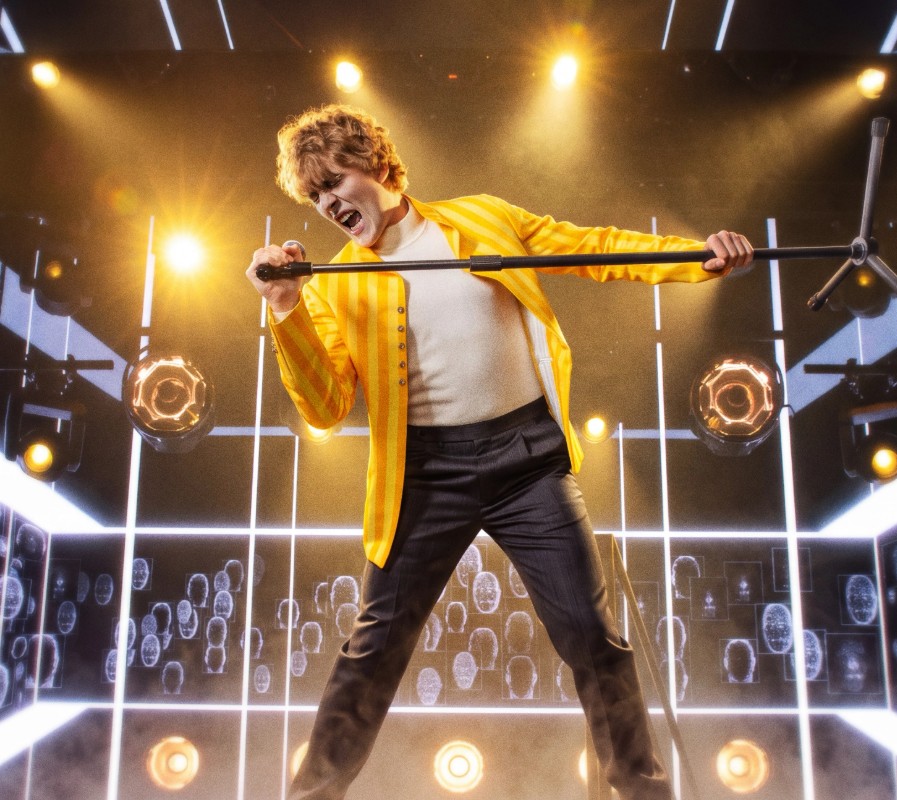
Still, we found a lot to enjoy in the very Tron-like production. If you remember the 1982 sci-fi action film, you’ll remember the neon-edged characters who traveled at light speed throughout the film. This Tommy told basically the same story as the 2024 revival based on the 1993 reimagining of Pete Townshend’s masterpiece.
Another similarity the touring show has with the Fillmore premiere was volume. The Who played at deafening decibel levels. So loud was it that my friends and I chewed up part of the program cover and used it as earplugs. The Pantages was up there in volume as well, not hurtful, but my Grandmother would have bolted. And the quality of the vocals left something to be desired. I engineered my share of LPs in the last fifty years, and I know over-compressed signals when I hear them. The vocals and the guitars were squashed, as it would be said in the studio, robbing some of the music of its natural dynamic impact.
The choreography and the singing had the audience on the edge of their seats. It was that good.
From the marching military men in Captain Walker’s division to dancing gamers at the amusement arcade during “Pinball Wizard” to the crowds belting out “We’re Not Gonna Take It,” the production was one full of dazzling theatrical images – Broadway eye candy that is so satisfying to watch.
Because there were no explicit endings of songs, the crowd was hesitant about when and where they could applaud. They certainly wanted to clap but they were unsure, it seemed, if they could. The finale certainly brought out the standing O as the cast deserved it all. Collin Matthew Flanagan as Tommy, Zach Fogel as Captain Walker and Mia Bergstrom as Mrs. Walker were the stars of the evening. Their powerful vocal ranges and their harmonizing were spectacular. Even in the back row we were singing along with them all. And please don’t forget Kris Lyons as the Acid Queen who brought the house down with her signature song infused with her trippy dancing.
The production had a great many lessons for today’s TikTok generation, most notably the questioning of the machinery of celebrity and why do we search for transformation within a cult figure we have exalted. I’ve spent decades inside the music business, and I have witnessed the effects of fame first-hand. And often the public personality is quite different from the human being. Tommy became famous because of his exceptional skills at the pinball machine. But when he emerged from his years of isolation, his followers mistook his transformation for spiritual authority.
Tommy’s followers never got the message that they each possess the power within themselves to be free. This is the same message that Townshend received from his mentor, Meher Baba. We all wear the ruby slippers. The power to return home has always been within our grasp. Tommy comes to this same conclusion by the finale.
The original Tommy couldn’t communicate with the world while the modern Tommy can communicate but nobody’s listening. They are all too busy worshipping him to hear what he’s saying.
Pete Townshend’s message may be more relevant than ever.
Looking around the Pantages, I had plenty of company among Who fans of a certain age, and the rapt silence told me the music still held us. If you know every note of Tommy and wonder whether you need to see it onstage, take it from someone who saw The Who perform it in 1969: there is still plenty here to stir you.
The Who’s Tommy continues at the Hollywood Pantages through November 15; eight performances weekly. Tickets: Box Office (323)468-1770 or online Broadway in Hollywood